Introduction
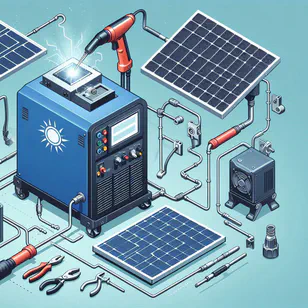
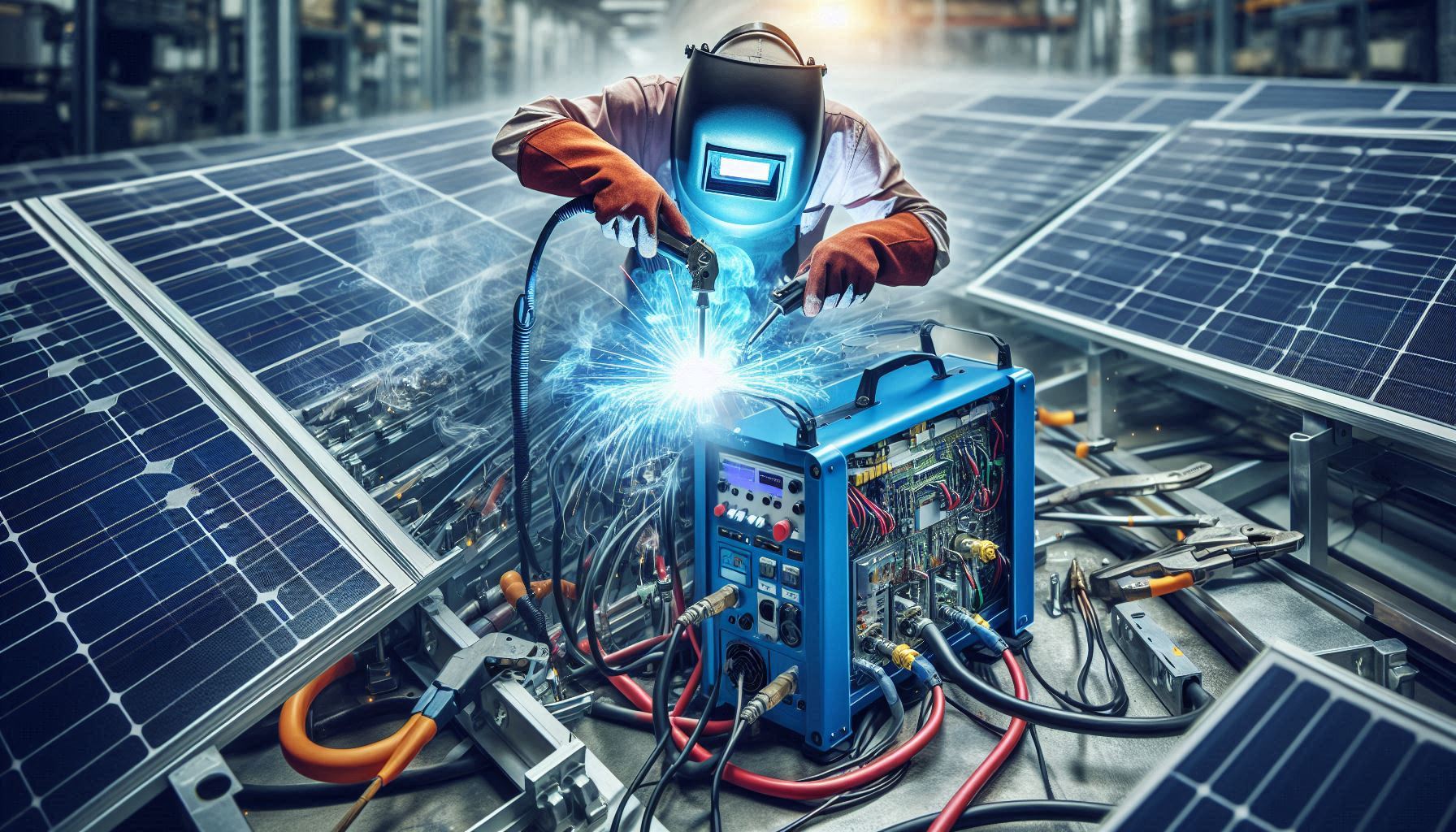
Welding with a solar inverter may seem like a convenient option, especially when dealing with off-grid systems. However, as real-world experience shows, this is a risky idea that can lead to severe consequences for both your inverter and batteries.
Recently, I found myself in a difficult situation and had to resort to using a semi-automatic welder powered by a low-frequency 7 kVA inverter. While the inverter managed to hold up, one of my lithium-iron-phosphate batteries (LiFePO4) did not. Out of the four batteries in parallel, each consisting of 16 cells and 75 Ah capacity, one was permanently damaged. The battery management system (BMS) shut it down, failing to detect two cells. Tomorrow, I will investigate the damage further.
This serves as a strong reminder: do not attempt welding through a solar inverter—especially not budget models. Many inexpensive inverters, particularly those made in China, cannot handle the high demands of welding machines.
Why Inverters Struggle with Welding Machines
Welding machines demand a high, consistent power supply that many solar inverters, especially low-frequency ones, aren’t built to provide. While you might think that a robust inverter could manage, the truth is that the intense power spikes can stress your system to the point of failure, as happened in my case.
If you are considering using a solar inverter for welding, you may want to learn more about the importance of selecting the right inverter for high-demand applications in our article, Maximizing Solar Power with MPPT Controllers .
Battery Issues with High-Demand Equipment
Not only can the inverter struggle, but batteries, especially lithium-based ones, are prone to damage when exposed to the high currents required for welding. This is particularly true for systems with lithium iron phosphate (LiFePO4) batteries. These batteries may shut down to protect themselves, but they can still be damaged by prolonged exposure to excessive power loads. Understanding the compatibility of your batteries with your solar system is crucial, as explained in our guide Understanding Batteries for Solar Energy .
Other Risks
Aside from damaging your batteries, welding through a solar inverter can cause other problems, such as overheating of components, distortion of sine waves, and the triggering of safety systems. You might also face issues with the inverter’s internal electronics, which aren’t designed to manage the power surges common in welding.
If you’re looking for safer ways to use solar energy for high-demand tasks, check out our article on Idle Power Consumption in Inverters and UPS Systems to better understand how to optimize your system.
Final Thoughts
Welding through a solar inverter, while technically possible, is fraught with risks. The potential for damage to your batteries, inverter, and other components far outweighs any short-term convenience. If you’re in need of welding equipment for a project, it’s better to use a dedicated generator or traditional grid power. Avoid the costly mistakes I experienced—stick to safer, more reliable power sources for high-demand tasks.
For those interested in learning more about inverter applications and safety, check out Welding Machine with Solar Inverter or UPS: A Guide .