Introduction
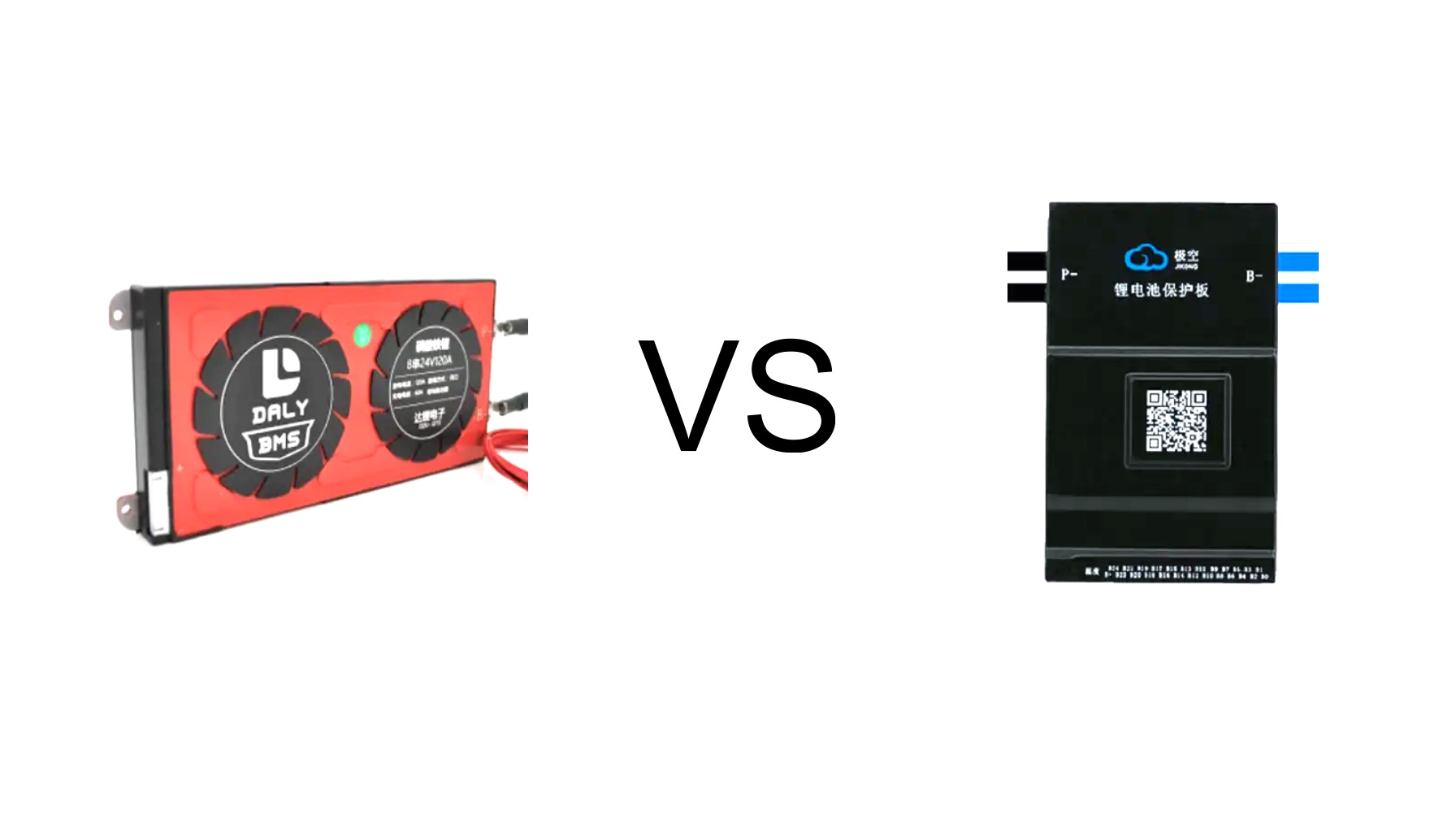
In recent years, the LiFePO4 battery market has seen significant changes. Previously popular BMS units from DALY are gradually being replaced by newer solutions with active balancing, such as those from JK. Let’s explore why this shift is happening and what benefits the new technology offers.
The Era of DALY: Popularity and Issues
A few years ago, DALY BMS units were at the height of popularity. At the time, the appearance of counterfeit products on the market highlighted the high demand. However, a major drawback of these BMS units was their reliance on passive balancing, which worked by discharging the most charged cells through a resistor, turning excess energy into heat. This process was slow and inefficient, particularly with a maximum current of only 0.25 amps.
Later, active balancers from DALY became available, but they required separate connections and numerous additional wires, complicating installation and use.
Advantages of JK BMS: Active Balancing and Ease of Use
The introduction of JK BMS units brought a significant shift to the market. These devices combined the functions of a BMS and an active balancer, offering simplicity and more efficient operation. The main feature of JK BMS is active balancing, which allows for the efficient redistribution of energy between the most charged and discharged cells.
Key benefits of active balancing:
- Fast and efficient balancing: Current flows up to 1 amp and higher, unlike the slow passive balancing.
- Increased usable capacity: With minimal difference between cells, more energy can “flow in and out,” which subjectively increases capacity by about 15%.
Myths and Realities: Concerns About Active Balancing
There are myths that active balancing can reduce battery life or discharge it to zero. However, modern BMS units like those from JK come with built-in software that prevents the battery from discharging below a certain level, and all settings can be individually adjusted by the user.
Price and Availability
Until recently, JK BMS units with active balancing cost around $130 for a 150-amp model with 1 amp balancing for 48V LiFePO4. Today, these devices are available for around $100, making them affordable and competitive compared to DALY.
Conclusion
Currently, there are no compelling reasons to choose BMS units with passive balancing. Active balancing, as offered in JK BMS units, provides a more technologically advanced and efficient solution for managing LiFePO4 batteries.